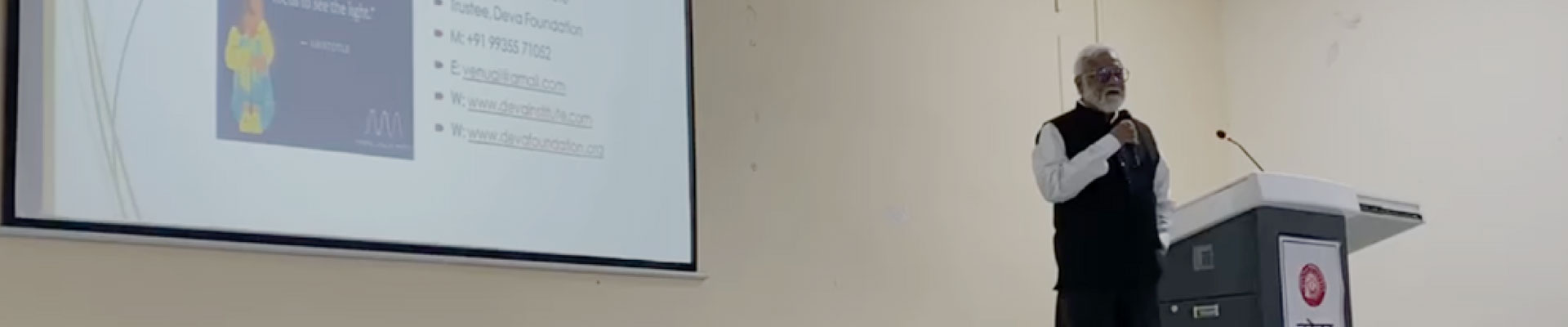

Dr. Shrivastava is currently leading a non-profit initiative focused on student mental health in
India. His mission is to build mental health capacity across educational systems, enhance access to
timely care, and reduce the burden of mental health conditions among students. He strongly advocates
for a paradigm shift in mental health thinking-one that emphasizes early identification of risk, the
cultivation of positive psychological strengths, and the recognition of mental well-being as a
cornerstone of academic success, physical health, and personal fulfillment.
Dr. Shrivastava holds the title of Professor Emeritus of Psychiatry at Western University in London,
Ontario, Canada. During his tenure, he played a pivotal role in advancing early intervention and
complex care programs, particularly for schizophrenia and suicide prevention. Over the course of his
40-year career, he has contributed significantly to clinical psychiatry, with notable work in acute
care, student mental health, and community-based suicide prevention both in India and
internationally.
In the UK, he served as a Consultant Psychiatrist in General Adult Psychiatry in London, and his
international contributions have extended through his long-standing involvement with the World
Psychiatric Association. There, he was the founding Secretary of the Section on
Psychoneuroendocrinology for over 12 years, Vice-Chair of the Positive Psychiatry Section, and an
active member of the WPA sections on Stigma, Suicide, and Education.
Dr. Shrivastava was also the Director of a pioneering suicide prevention service in Mumbai, which he
established and led for over 12 years. Under his leadership, several community mental health
programs were launched, including support groups, home-based care models, early intervention
initiatives, and school-based suicide prevention campaigns. He trained teachers in suicide
prevention strategies and played a central role in forming a government-led suicide taskforce in
collaboration with the University of Mumbai in the late 1990s.
His work has earned him numerous national and international accolades, including:
Among his academic achievements, Dr. Shrivastava co-developed the SISMAP (Suicide Intervention Scale
and Monitoring for Assessment and Prevention) tool with Dr. Charles Nelson, which is a significant
contribution to suicide risk assessment. He also co-edited the acclaimed five-volume book series
Suicide from a Global Perspective alongside Dr. David Lester.
In response to the growing mental health needs of students, Dr. Shrivastava created a comprehensive
set of psychometric tools known as the Mental Health Assessment Scale for Students (Mumbai). He has
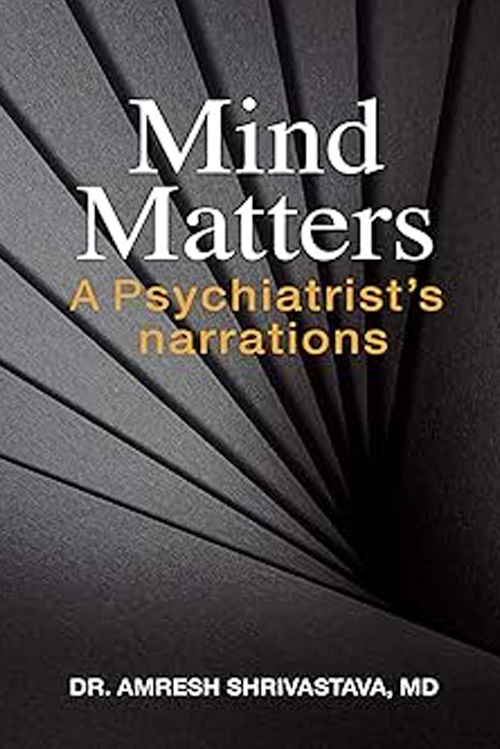
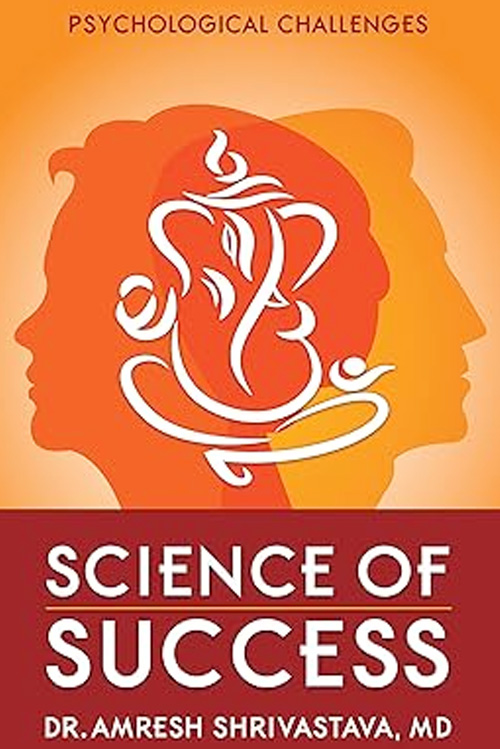
authored over 15 non-fiction books aimed at promoting mental health education among youth.
Dr. Shrivastava has served in public and private healthcare institutions across India and continues
to influence national policy and practice. His foundation has been recognized by the Ministry of
Health and Family Welfare, Government of India, for its contribution to digital mental health
innovation. His mobile and web-based platforms are currently being integrated into the Ayushman
Bharat Digital Mission ecosystem.
He is a well-known speaker at international conferences, national academic forums, and government
policy discussions, where he regularly shares his insights on building mental strength, culturally
relevant mental health models, and the future of digital mental health services in India.
His work is guided by a vision of compassionate, scalable, and evidence-based care that empowers
individuals and institutions to foster resilient, mentally healthy futures.
Dr. Amresh Shrivastava is an internationally recognized psychiatrist and researcher whose academic
contributions span over four decades across multiple domains of mental health, particularly in India
and Canada. His early research began with an evaluation of the role of yoga in psychiatric
treatment, focusing on how traditional practices could complement clinical care for patients with
mental illness.
Dr. Shrivastava’s foundational work also includes in-depth studies on sociodemographic
characteristics of psychiatric patients and their implications for treatment outcomes.
Another early area of focus was emergency room psychiatry, where he investigated the patterns of
acute psychiatric presentations, especially in urban India. His work highlighted the burden of
undiagnosed or untreated psychiatric conditions that often lead individuals to seek help during
crises. He advocated for early detection and intervention, as well as better integration of
psychiatric services within general hospital settings to manage emergency mental health needs more
effectively.
Over the years, Dr. Shrivastava's research expanded significantly into schizophrenia, particularly
the long-term outcomes of first-episode patients. One of his most cited studies was a 10-year
follow-up of individuals with schizophrenia, which revealed that while positive symptoms often
reduced over time, negative symptoms and functional impairments persisted, severely affecting social
recovery. He identified several predictors of positive long-term outcomes, including lower baseline
depression and aggression, early engagement in work, and higher independence in daily functioning.
In the area of suicide prevention, Dr. Shrivastava made landmark contributions. He demonstrated that
suicide risk remains high even after clinical improvement, particularly among patients with
schizophrenia and other severe mental illnesses. This finding challenged conventional views and
emphasized the importance of continued monitoring of suicidality even when overt symptoms subside.
To support this clinical need, he co-developed the SISMAP ( Scale for Impact of
Suicidality--Management, Assessment and Planning of Care
a unique psychometric tool for assessing suicide risk based on both clinical and psychosocial
indicators.
Parallel to clinical psychiatry, Dr. Shrivastava pursued early intervention in psychosis, especially
in resource-limited settings like India. He collaborated with global experts to adapt and implement
early intervention strategies suited to the Indian sociocultural context. His studies outlined both
the benefits and systemic barriers of early intervention models, reinforcing the need for culturally
adaptable frameworks in mental health care.
Another core area of his research has been mental illness stigma. Dr. Shrivastava developed the
Stigma Quantification Scale (SQS) to empirically measure the levels and impact of stigma on patients
and caregivers. His work showed that stigma not only delays help-seeking but also negatively affects
treatment adherence, self-esteem, and recovery. His advocacy for anti-stigma programs has informed
multiple community and governmental mental health campaigns.
Dr. Amresh Shrivastava has an extensive academic record with over 150 publications in peer-reviewed
journals, focusing on schizophrenia, suicide prevention, biological psychiatry, and mental health
systems.
He has authored and co-authored numerous original research articles, review papers, and case studies
in leading psychiatric journals . His areas of focus include suicide, early intervention in
psychosis, psychoneuroendocrinology, and community-based mental health models.
In addition to research articles, he has delivered over 300 presentations, invited lectures, and CME
(Continuing Medical Education) sessions across academic institutions, medical associations, and
international conferences. His CME content has covered practical clinical psychiatry, suicide risk
assessment, and neurobiology for clinicians, with special modules for general practitioners and
medical students.
Dr. Shrivastava is also a recognized contributor to mental health awareness in the lay press. His
commentaries and educational articles have been published in newspapers, health magazines, and
online platforms aimed at students, parents, and teachers. He has authored a 15-book non-fiction
series on student mental health in simple language, focusing on stress, resilience, emotional
intelligence, and well-being.
Through his writings-academic and public-Dr. Shrivastava has worked tirelessly to bridge the gap
between cutting-edge psychiatric science and everyday mental health literacy, particularly in the
context of youth, suicide prevention, and school-based mental health promotion.

Best research paper, Behavioral characteristics of patients vulnerable for repeated hospitalization. Regional Mental health care, Annual Conference, Regional Mental health care, London, Ontario, Psychiatry, London, Ontario, Canada in 2015.
Best research paper (Oral presentation), This award is given for research work done in the Regional mental health care, London, Ontario, Canada. Title of my research paper was ‘Rehospitalization: The patient, the illness or the doctor’, Type: Research award, Principal Author and presenter, Local, Regional mental Health Care, London, Ontario, Canada, Ontario, Canada (2013)
Best Oral Presentation Research Award, Regional Mental Health Care London for paper: “Improving risk assessment with suicidal patients: a preliminary evaluation of the clinical utility of the scale for impact of suicidality-management, assessment and planning of care (SIS-MAP)”. Type: Research award, Principal Author and Presenter, Local, Regional Mental Health Care London Annual Research Bulletin, London, Ontario, Canada (2008)
Fellow of American Psychiatric Association [FAPA], Distinguished Services in Psychiatry, Type: Distinction, Distinguished Services as fellow, International, American Psychiatric Association, Psychiatry, United States (2015)
Indo-Canadian Psychiatric Association, President’s Award, ‘Recognition of contribution to Global Mental Health and Research’ (2014) This award was introduced in 2014 by Indo-Canadian Psychiatric Association, given during the annual conference of Canadian Psychiatric Association. Type: Distinction, Promotion of International mental health, International, Indo-Canadian Psychiatric Association, Toronto, Ontario, Canada
Life-time achievement award from indo-canadian psychiatric association, conferred during annual conference of the association at Montreal Canada 2024
Ashoka Award for Social Entrepreneurship from Ashoka Innovators for Public, “Suicide prevention services in city of Mumbai”. USA award for promotion of international mental health. Type: Distinction, Executive Director of Suicide Prevention Service Program, International, Ashoka Innovators for Public, Washington, United States (1997)
RO Jones Best Paper Award, a research award from Canadian Psychiatric Association, presented at CPA annual meeting, Vancouver, BC, for paper: Improving risk assessment with suicidal patients. A preliminary evaluation of the clinical utility of the scale for impact of suicidality-management, assessment and planning of care (SIS-MAP), a new structured clinical interview based on clinical norms. Principle Author and Presenter, National, Research award from Canadian Psychiatric Association, Vancouver, British Columbia, Canada (2008)
Bombay Psychiatric Society’s Silver Jubilee Award, for best paper at national level: Clinical validity of schizoaffective disorder: a 2 year follow up study. Type: Research award, Principal Author and presenter, International, Indian Psychiatric Society, Bangalore, K , India (1997)
Promotion of “International Mental Health”, Awarded for significant contribution to the field of International Mental Health, , Academics and Service development, International, Indo American Psychiatric Association, New York, New York, United States (1996)
Tilak Venkobarao Oration Award for Biological Psychiatry, Topic: “Psychosis with epilepsy: a neuropsychiatric model for psychiatric disorders” Awarded to Young Researcher, Type: Distinction, Researcher and presenter, International, Indian Psychiatric Society, Biological Psychiatry, Bangalore, , India (1996)
West zone best paper award, President’s Award (India), For paper “Clinical validity of schizoaffective disorder: 2 years follow up study”, Type: Research award, Principle Author and Presenter, International, Indian Psychiatric Society, India (1995)



1. Amresh Shrivastava, Avinash De Sousa, G. Prasad Rao. Brain‐Derived Neurotrophic Factor and
Suicide in Schizophrenia: Critical Role of Neuroprotective Mechanisms as an Emerging Hypothesis.
Indian Journal of Psychological medicine, 2016 Nov 1; 38 (6): 499-504, Principal Author,
2. Amresh Shrivastava, Avinashi De Sousa. Rucha Slue. Wellness as a means of a better quality of
life in schizophrenia. Journal Psychosocial Rehabilitation and Mental Health, 2016 Oct 27; 3 (1),
Principal Author,
3. Amresh Shrivastava, Robbie Campbell, Megan Johnston, Avinash DeSousa, Nilesh Shah, Karia S.
Predictors of patients with high suicidality during the post-discharge period in the early phase of
schizophrenia. International Journal of medical sciences and public health, 2016 Jul 15; 5 (12):
1-4, Principal Author,
4. Amresh Shrivastava, Avinash De Sousa, Gustav Tafel, Charles Numeroff. Neuroendocrine aspects of
resilience. Advances in Psychiatry, 2016 Jul 1, Principal Author
5. Amresh Shrivastava, Avinash De Sousa, Sushma Sona vane, Nilesh Shah. Resilience Improves
Neurocognition and Treatment Outcomes in Schizophrenia: a hypothesis. Open J Psychiatry, 2016 Jul 1;
6 (2): 173-187, Principal Author
6. Srivastava A, Belmont C, Campbell R, Johnston M, De Sousa A, Shah N. Suicide in hospitalized
early psychosis patients at the time of discharge from hospital: An exploratory study of attempters
and nonattempters. Indian J Psychiatry, 2016 Jun 1; 58 (14): 142-6, Principal Author
7. Richard Zayed; Brenda Davidson; Lucie Nadeau; Terrence S. Callanan; William Fleisher; Lindsay
Hope-Ross; Stacey Espinet; Helen R. Spenser; Harold Lipton; Amresh Srivastava; Lorraine Lazier;
Tamison Doey; Sarosh Khalid-Khan; Ann McKerlie; Neal Stretch; Roberta Flynn; Sabina Abidi; Kimberly
St. John; Genevieve Auclair; Vitaly Liashko; Sarah Fotti; Declan Quinn; Margaret Steele. Canadian
Rural/Remote Primary Care Physicians Perspectives on Child/Adolescent Mental Health Care Service
Delivery. J. Can Acad Child Adolesc Psychiatry, 2016 Jan; 25 (1): 24-34, Coauthor
8. Rahel Eynan, Leanna Reiss, Paul Links, Ravi Shah, TSS Rao, Shubhangi Parkar, Lakshman Dutt,
Kranti Kadam, Amresh Shrivastava. Suicide prevention competencies among urban Indian physicians: a
needs assessment. Indian Journal of Psychiatry, 2015 Oct 1; 57 (4): 397-402, Senior Responsible
Author
9. Amresh Shrivastava. Should suicide behavior be an outcome parameter for a mental disorder? Indian
Journal of Mental Health, 2015 Jul 1; 1 (2(2)): 121-123, Principal Author
10. Amresh Shrivastava, Megan Johnston, Avinash Desousa, Siddhansh Shrivastava, Sanjay Kukreja,
Nilesh Shah, Shubhangi Parkar. Mental health service utilization by referrals from a helpline for
suicide prevention in Mumbai, India. International Journal of Clinical Psychiatry and Mental Health,
2015 Apr 30; 3 (1): 4-8, Principal Author, DOI: http://dx.doi.org/10.12970/2310-8231.2015.03.01.2


He serves as Professor Emeritus of Psychiatry at Western University in London, Ontario, Canada, and is an Adjunct Scientist at the Lawson Health Research Institute.